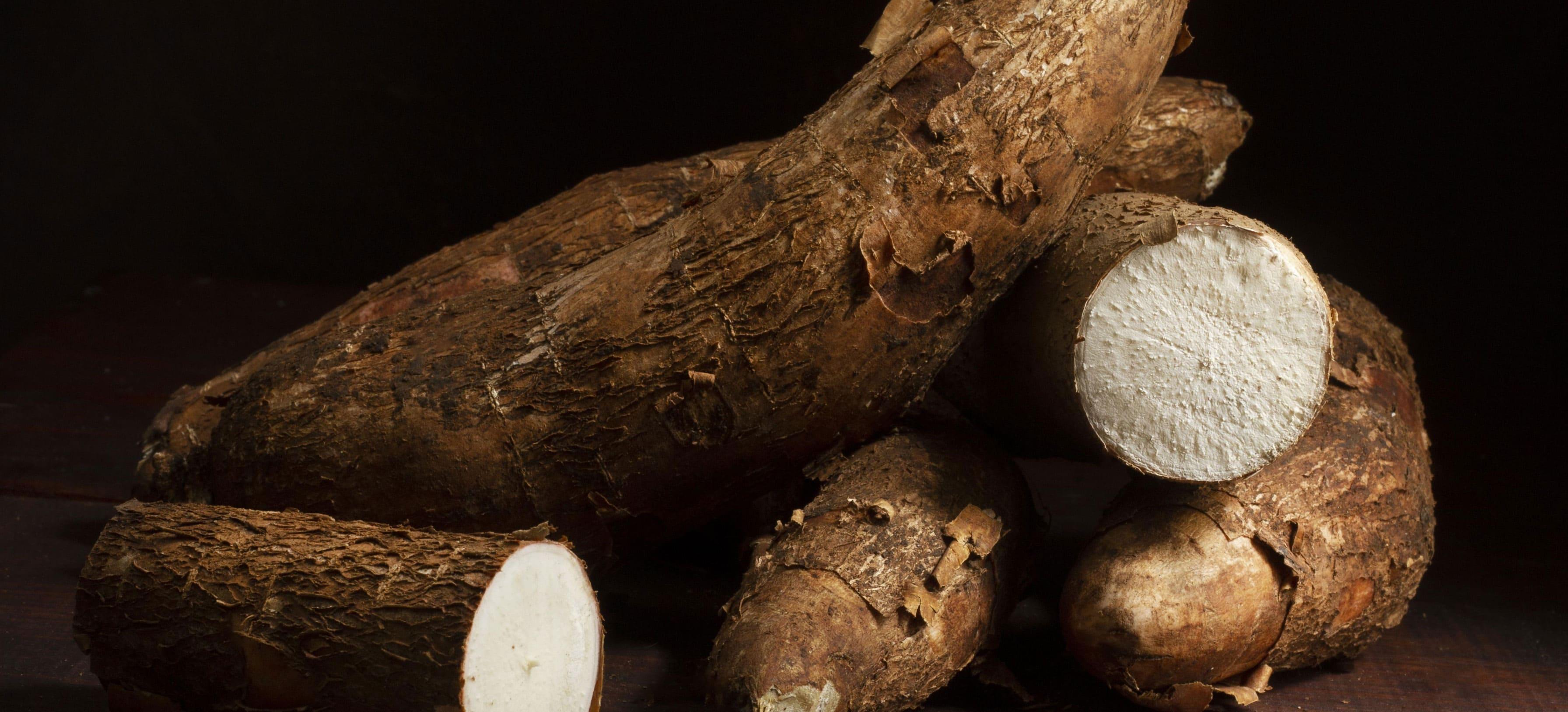
Cassava
The One Pager Business Plan for Cassava
The One Pager Business Plan (Cassava)
Presented in bite size and easy to understand language, The One Pager Business Plan highlights the basic insights and considerations that helps you to decide if and how to engage in agricultural ventures.
Cassava in the World
Cassava (Manihot esculenta) stands as a cornerstone of agricultural and cultural significance in the world. The global consumption of cassava is projected to reach 110 million metric tons by 2026, a 0.3% decrease from 2021 figures.
Cassava in Nigeria

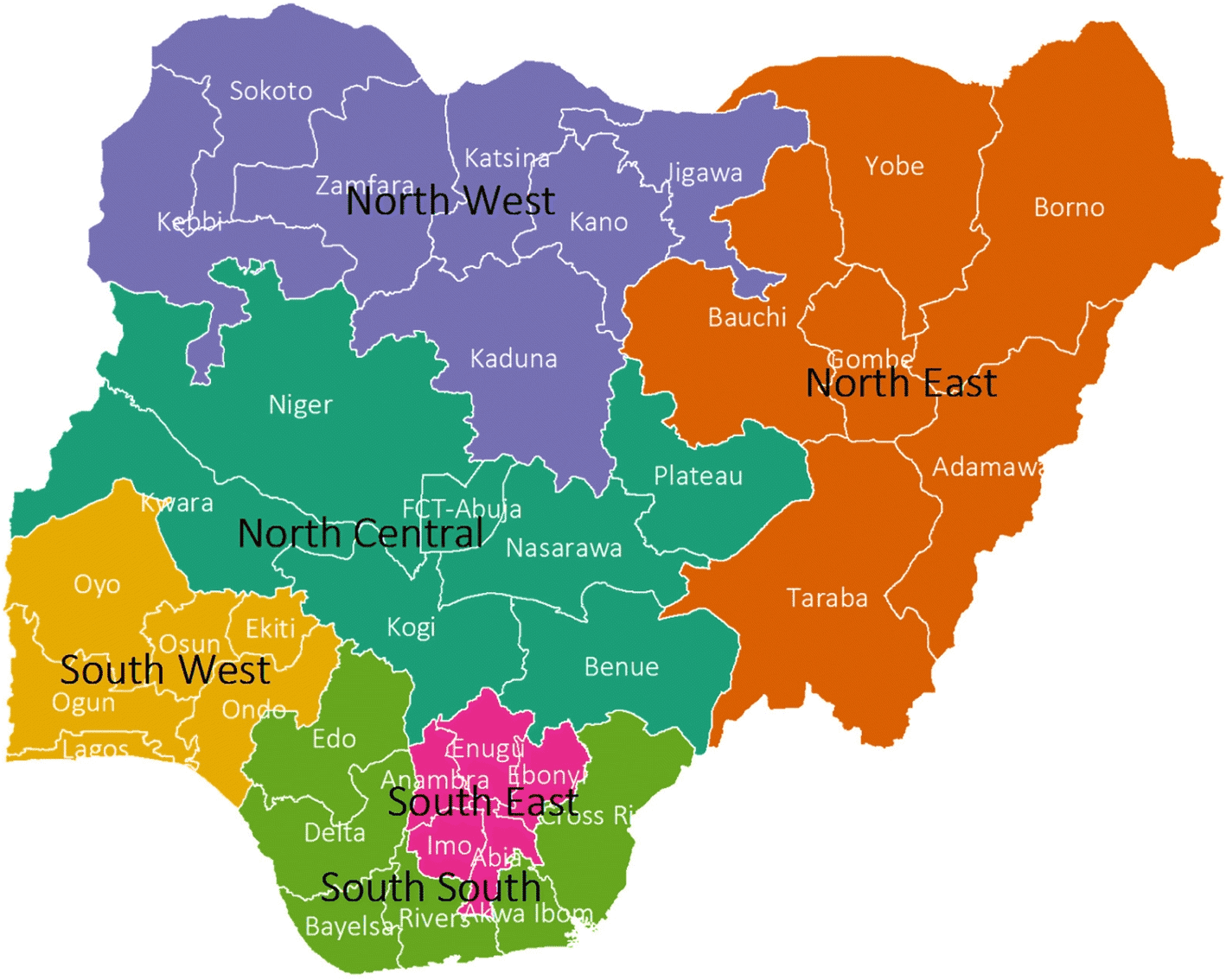
Producing Regions
| North Central | Niger, Benue, Kogi, Nasarawa, and Kwara |
| South West | Oyo, Osun, Ogun, Ekiti, and Ondo |
| South East | Anambra, Abia, Ebonyi, and Enugu |
| North South | Delta, Edo, and Cross River |
SWOT Analysis
Strength: Available base resources of land, labour and know-how.
Weakness: Financing of new entrants may be difficult.
Opportunity: Growing market due to growing population and cassava industrialization.
Threat: Importation of cassava derivatives and market volatility.
PESTLE Analysis
Political
Economic
Social

Technology
Legal
Environment
Technical Consideration
Operations
A medium-holder farm can be managed with a lean operational framework of not more than 5 people, mostly contracts with little overhead cost. Most administrative tools for such tasks as bookkeeping, project management and reporting can be sourced freely.
As farms grow, headcount may grow, however, it is advised to keep operations lean and overhead low by using contract workers for most of the farm tasks while growing capacity in managerial areas.
Risk

North Central: Environmental risks in cassava production in the north include climate variability (rainfall patterns and temperature) leading to poor yields, soil degradation, and security issues.
Mitigant
 Medium Probability
South West & South East: Possible pest and disease outbreaks thrive. Soil degradation due to improper practices reduces fertility.
Mitigant
Medium ProbabilitySouth South: Rainfall is abundant and soil is suitable, however carbon and sulphur pollutions and overusing agrochemicals with pollutes the environment.
Mitigant
 High Probability
Poor technical knowledge of the cultivation, field management and cassava value chain experience and expertise.
Mitigant
 Low Probability
North Central: Low invasion of pest and outbreak of diseases.
Mitigant
Low ProbabilitySouth West and South East: High pest invasion and outbreak of diseases.
Mitigant
High ProbabilitySouth West and South East: High pest invasion and outbreak of diseases.
Mitigant
High Probability
Lack of inadequate financial supports to the farmers when it is needed for cultivation.
Mitigant
Medium Probability
North Central: Concentration of local market.
Mitigant
Medium ProbabilitySouth West: Concentration of both local and Industrial/Commercial market.
Mitigant
Low ProbabilitySouth South & South East: Concentration of local market.
Mitigant
Medium Probability
North West, North East: Low price per ton / Negative price movement.
Medium ProbabilityNorth Central: Price per ton is usually the prevailing market average movement.
Low ProbabilitySouth West: High price per ton / Positive price movement
Mitigant
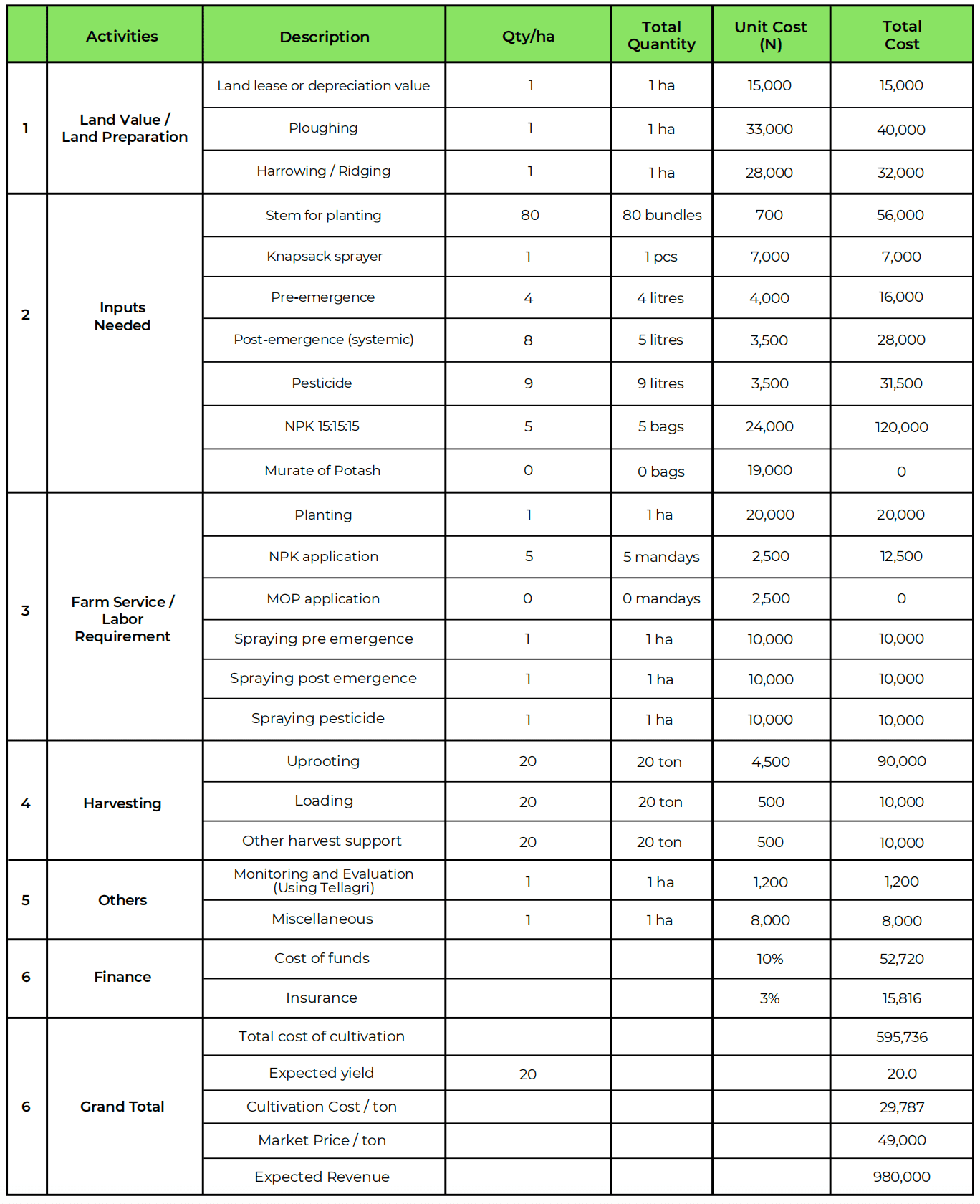
Medium ProbabilityEconomics of Production (July 2023)
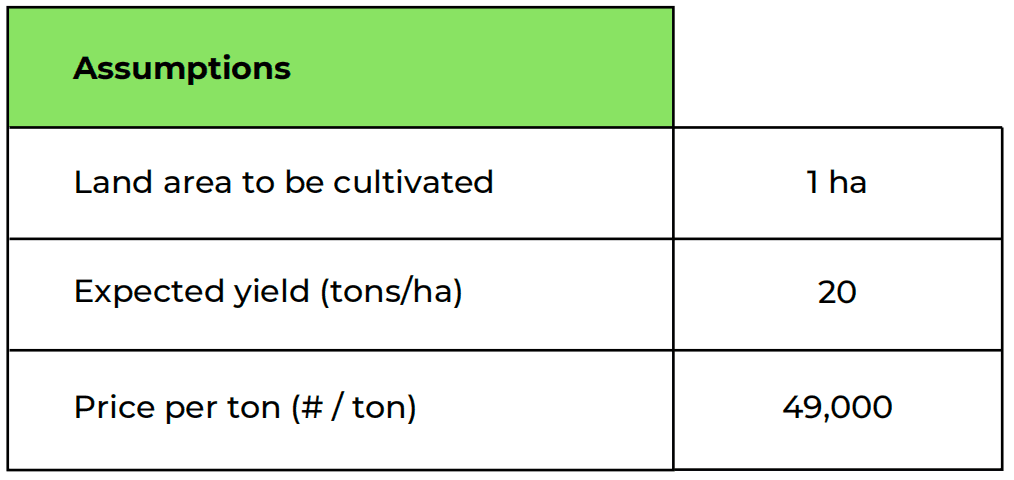
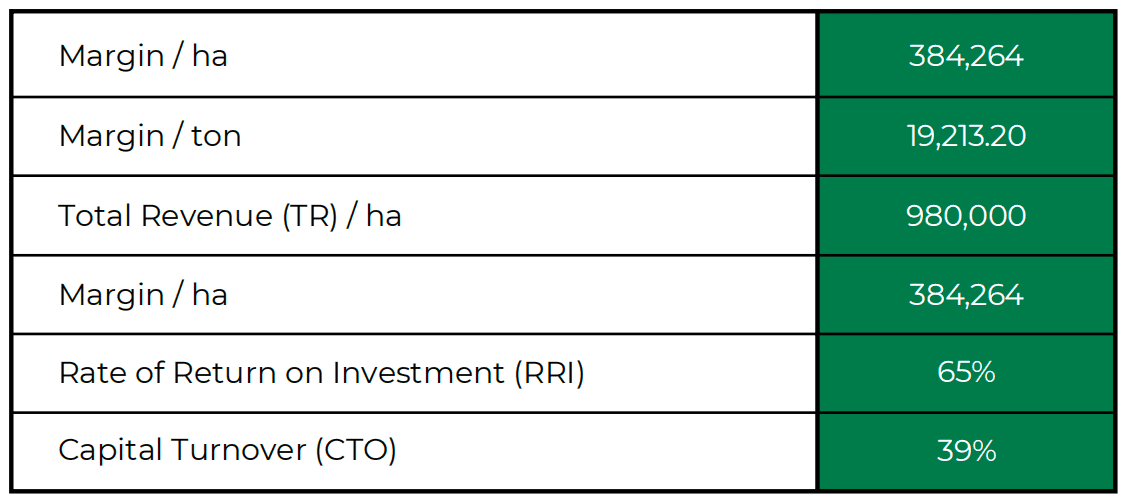
Profitability of Production (July 2023)

Conclusion
In Nigeria, each geographical area possesses distinct characteristics and nuances concerning the Economics of Production (EOP) and profitability of the cassava value chain. The table above illustrates that the potential net profit within the cassava value chain is most significant in the southern regions, specifically the southwest and south-south regions of the country. This phenomenon can be attributed to the presence of both local and industrial/commercial markets in these areas. The intense competition between these markets within these regions amplifies the demand for fresh cassava tubers, consequently leading to an uptick in the price per ton.
Furthermore, the intricacies associated with cultivating cassava in Nigeria's North Central region contribute to relatively higher cultivation costs. This is primarily due to the necessity of applying supplementary top-dressing fertilizer in this region.

